
How to Choose the Right Fitness Program for Your Goals
The primary effect of the Department’s proposed final rules governing water closet clearances in single-user toilet rooms with in-swinging and out-swinging doors is to allow sufficient room for “side” or “parallel” methods of transferring from a wheelchair to a toilet. Under the best weight loss fitness apps current 1991 Standards, the requisite clearance space in single-user toilet rooms between and around the toilet and the lavatory does not permit these methods of transfer. Side or parallel transfers are used by large numbers of persons who use wheelchairs and are regularly taught in rehabilitation and occupational therapy. Currently, persons who use side or parallel transfer methods from their wheelchairs are faced with a stark choice at establishments with single-user toilet rooms—i.e., patronize the establishment but run the risk of needing assistance when using the restroom, travel with someone who would be able to provide assistance in toileting, or forgo the visit entirely. The revised water closet clearance regulations would make single-user toilet rooms accessible to all persons who use wheelchairs, not just those with the physical strength, balance, and dexterity and the training to use a front-transfer method.
Evaluating Different Types of Fitness Programs
Title II coverage, however, is not limited to «Executive» agencies, but includes activities of the legislative and judicial branches of State and local governments. All governmental activities of public entities are covered, even if they are carried out by contractors. For example, a State is obligated by title II to ensure that the services, programs, and activities of a State park inn operated under contract by a private entity are in compliance with title II’s requirements. The private entity operating the inn would also be subject to the obligations of public accommodations under title III of the Act and the Department’s title III regulations at 28 CFR Part 36. Many commenters expressed disappointment that the NPRM did not require title II entities to make their Web sites, through which they offer programs and services, accessible to individuals with disabilities, including those who are blind or have low vision.
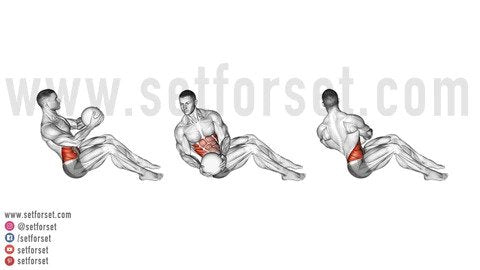
Use your body weight to build strength
In addition, theDepartment received feedback indicating that the course content offered by many publiceducational institutions is frequently changing. The Department is therefore notconvinced that giving public educational institutions additional time to comply withsubpart H would provide meaningful relief to those entities. Public educationalinstitutions will continually need to make new or changed course content accessibleafter the compliance date. 167 Accordingly, even if the Department were to further delay thecompliance time frames for public educational institutions, those institutions would notbe able to simply defer all accessibility efforts in this area. The Department alsobelieves it is appropriate to treat public educational institutions the same as other publicentities with respect to compliance time frames, which will promote consistency andpredictability for individuals with disabilities.
Tips for building your own fitness plan
In addition, given the wide variation in types of courses andpublic educational institution structures, it would be difficult to set a prioritizationstructure for existing content that would be workable across all such institutions. Some commenters contended that the proposed course content exceptions would beproblematic in the wake of the COVID-19 pandemic, which has led to a rise in purelyonline courses. One commenter pointed out that students with disabilities may be morelikely to enroll in purely online courses for a variety of reasons, including that digitalcontent tends to be more flexible and operable with assistive devices, and it is thereforeespecially important to ensure that online courses are fully accessible. At least onecommenter also stated that the proposed course content exceptions would have treatedstudents—some of whom pay tuition—less favorably than the general public withrespect to accessible materials. The Department already expects the impact of the exception will diminish over time forvarious reasons. For example, public entities may update the documents covered bythe exception, in which case they are no longer “preexisting.” In addition, theDepartment notes that there is nothing in subpart H of this part that would prevent publicentities from taking steps, such as those identified by commenters, to make preexistingconventional electronic documents conform to WCAG 2.1 Level AA.
Also, outdoor bicycling may involve risks of falls, cars, traffic, and other road hazards. For weight loss, exercise out of water is slightly more effective than other exercises of a similar intensity in the water because air insulates the body, increasing body temperature and metabolism for up to 18 hours. In contrast, water conducts heat away from the body, so that body temperature does not rise and metabolism does not remain increased after swimming. Also, swimming tends not to build muscle, because the muscles are supported by the water, which restricts the type of movements the muscles make. And because swimming is not a weight-bearing exercise, it does not help prevent osteoporosis.
Low-impact exercises: 10 joint-friendly workouts to try
Section 303(b) of title III states that, with some exceptions, elevators are not required in facilities that are less than three stories or have less than 3000 square feet per story. Section 501 of the ADA makes clear that nothing in the Act may be construed to apply a lesser standard to public entities than the standards applied under section 504. Because permitting the elevator exemption would clearly result in application of a lesser standard than that applied under section 504, paragraph (c) states that the elevator exemption does not apply when public entities choose to follow ADAAG. Thus, a two-story courthouse, whether built according to UFAS or ADAAG, must be constructed with an elevator. It should be noted that Congress did not include an elevator exemption for public transit facilities covered by subtitle B of title II, which covers public transportation provided by public entities, providing further evidence that Congress intended that public buildings have elevators. The final rule includes a new §35.135, entitles «Personal devices and services,» which states that the provision of personal devices and services is not required by title II.
Physical activity – choosing the one for you
- For example, when public educational institutions arrange for third parties to posteducational content on their behalf, public entities will still be responsible for theaccessibility of that content under the ADA.
- Therefore, this rulemaking fulfills the Department’s obligations under section 610 of the RFA.
- The Department received several comments explaining that social media platformssometimes have limited accessibility features, which can be out of public entities’control.
- Other commenters advocating for small public entities suggested thatthose entities should have more time than larger public entities to comply with subpart Hof this part, with suggested compliance time frames ranging from three to six years.Some commenters suggested the Department should adopt extended compliance datesfor certain requirements of subpart H that may be more onerous.
- See your doctor for advice, support and a medical check-up before you start any new physical activity program.
- The Department does not intend § 35.160(c)(2) to prohibit parents, guardians, or caregivers from providing effective communication for children where so doing would be appropriate.
It helps you maintain accountability towards yourself and provides valuable insights into what’s working for you regarding strength training or cardio activities. Your fitness level will change over time, so it’s important to adjust your workout plan accordingly. Alternatively, if you’re struggling to keep up with your current routine, it might be time to dial back and focus on building a stronger foundation. A well-rounded workout plan should incorporate elements from different types of exercises. This not only prevents boredom but also reduces the risk of injury by promoting overall fitness.

Section 35.152 Detention and correctional facilities—program requirements
It’s never been easier to boost your brand and make your services more accessible to customers. Maintain motivation by setting small, achievable goals, varying your workouts to keep them interesting, and tracking your progress to see improvements over time. Yes, mixing elements of beginner and intermediate programs is okay, as long as you listen to your body and maintain proper form. Mark, a fitness enthusiast with a history of back pain, discovered the value of adaptability and personalization in workout routines. Tailored nutritional guidance is crucial for meeting the diverse demands of different fitness levels, ensuring the body receives optimal nourishment for performance and recovery.
7 Tips to Help You Choose the Right Fitness Program
For each ticket for a wheelchair space purchased by an individual with a disability or a third-party purchasing such a ticket at his or her request, a public entity shall make available for purchase three additional tickets for seats in the same row that are contiguous with the wheelchair space, provided that at the time of purchase there are three such seats available. A public entity is not required to provide more than three contiguous seats for each wheelchair space. (ii) A public entity is not required to provide a reasonable modification to an individual who meets the definition of “disability” solely under the “regarded as” prong of the definition of disability at § 35.108(a)(1)(iii). (viii) The determination of whether an impairment substantially limits a major life activity shall be made without regard to the ameliorative effects of mitigating measures.
Q: What are some popular types of fitness programs?
Rather, it means that an individual with a disability who meets the requirement for such a sale (e.g., who is a member of the fan club or holds that credit card) will be able to participate in the special promotion and purchase accessible seating. The Department has maintained the substantive provisions of the NPRM’s § 35.138(a) and (b) but has combined them in a single paragraph at § 35.138(a)(2) of the final rule so that all of the provisions having to do with the manner in which tickets are sold are located in a single paragraph. Public entities also might consider grouping other power-driven mobility devices by type (e.g., EPAMDs, golf cars, gasoline-powered vehicles, and other devices). For example, an amusement park may determine that it is reasonable to allow individuals with disabilities to use EPAMDs in a variety of outdoor programs and activities, but that it would not be reasonable to allow the use of golf cars as mobility devices in similar circumstances. At the same time, the entity may address its concerns about factors such as space limitations by disallowing use of EPAMDs by members of the general public who do not have mobility disabilities.
This Strongwoman’s Viral Feat Redefines Strength Training
Notification will be given to those who have purchased such products six months prior to expiration. The Sports Nutrition for Health Professionals Course helps health and fitness professionals develop the knowledge needed to integrate nutrition science into their practices and explore the role of sports nutrition with clients. Davis, the Sports Nutrition for Health Professionals Manual is the focus of this course and guides health and fitness professionals with integrating the science of nutrition into their practices. It also provides advice on how to explore the role of nutrition and exercise with clients through four in-depth case studies. A multiple-choice quiz is included in this course to help gauge knowledge of the material.
Leave a reply
Leave a reply